↓ Download the Full Newsletter (PDF)
A Grand Re-Opening
by Ann Frechette
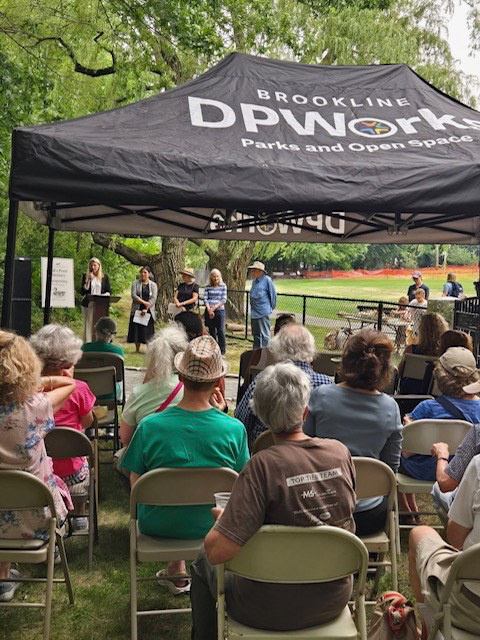
FOLKS from throughout Brookline gathered on the afternoon of July 15, 2026 to celebrate the long-awaited reopening of our beloved Hall’s Pond Sanctuary. The Sanctuary was closed to the public for eight months to enable the replacement of the boardwalk around the pond, the reconstruction of the boardwalk in Amory Woods, and the replanting of the entryways to the Sanctuary in conjunction with the Amory Park renovation. Throughout the closure, the upland woods trail was also resurfaced through the joint effort of DPW staff and volunteers from the Friends of Hall’s Pond.
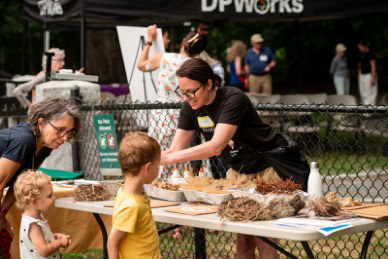
The ceremony was very lively, with a ribbon cutting at the entrance to the north overlook; with children’s activities including bird nest collages, picture book readings, and pretend bird costumes; and with guided walks and discussions with experts throughout the Sanctuary on birds, plants, trees, and the engineering of the renovation project.
Dignitaries in attendance included DPW Commissioner Erin Chute, Conservation and Natural Resources Manager Alex Cassie, Urban Forestry Manager Jack Schleifer, Director of Parks and Open Space Milee Pradhan, Director of Sustainability Alexandra Vecchio, and Conservation Commissioner Pamela Harvey. Former Conservation Administrator and Tree Warden Tom Brady also made a surprise appearance, as did several of Brookline’s elected representatives.
Please join us in the continued work of maintaining the Sanctuary by becoming a member, volunteering at our workdays, attending our Community Day celebrations and respecting the wildlife sustained by Sanctuary resources.
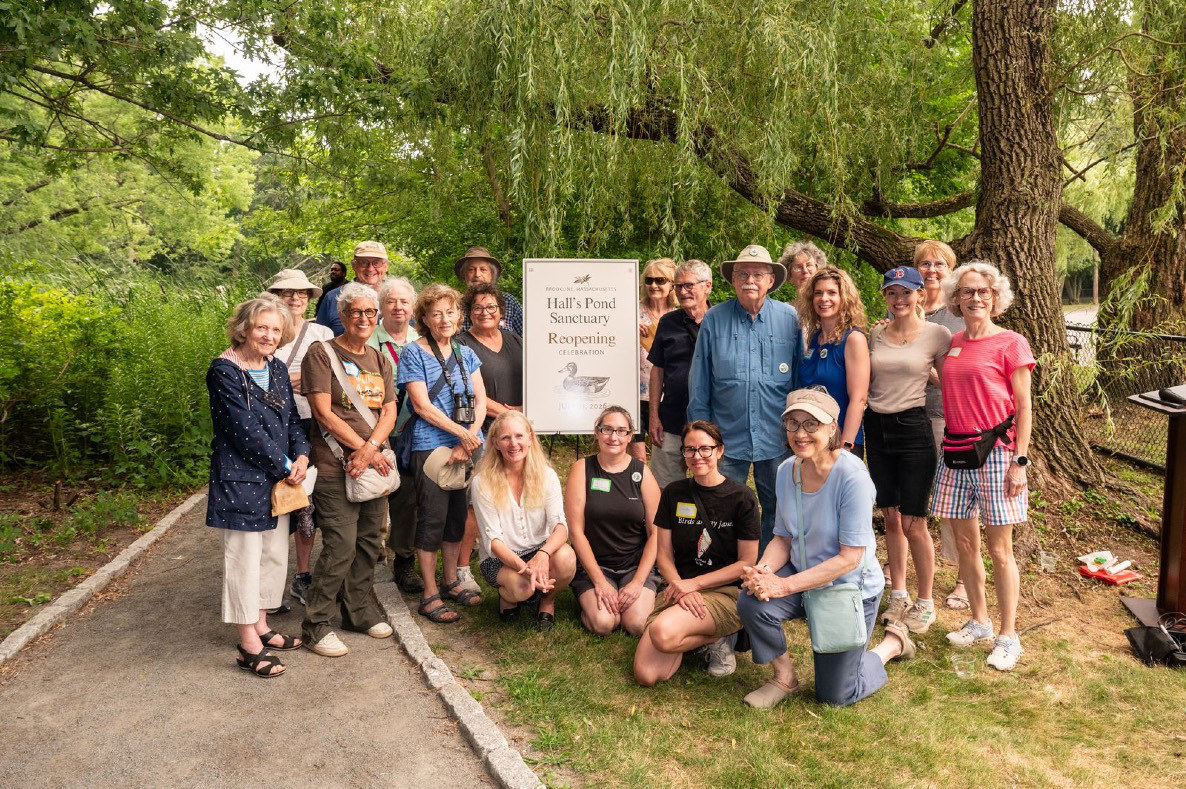
(Brookline DPW)
From the Co-Presidents
by Kimberly Santo and John Shreffler
IT WAS an unusually quiet year at Hall’s Pond with the closure of the sanctuary, due to the boardwalk renovation that took nearly 9 months to complete. It was, however, well worth the wait! In addition to rehabilitating the existing structure around the pond, an elevated boardwalk was added in Amory Woods that allows for access across an area that historically floods after heavy rainfall. Accessibility issues also mandated the closing of the gate between the parking lot and Amory Woods, with continued public access through the north and south gates to the pond, as well as through the small gate behind the formal garden.
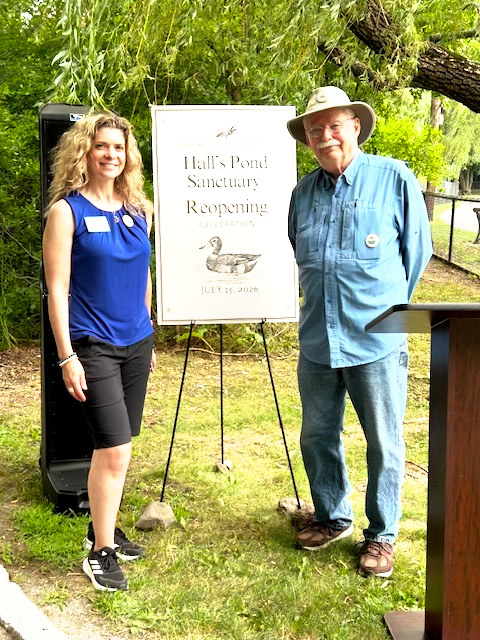
The Sanctuary reopened on June 18, followed by a formal re-opening ceremony on July 15. A full roster of Conservation Commission and DPW officials spoke, and the event had a large and enthusiastic public. The boardwalk project could not have come together without everyone’s support and we are grateful to all of you! For fuller details, see the article “A Grand Reopening!”
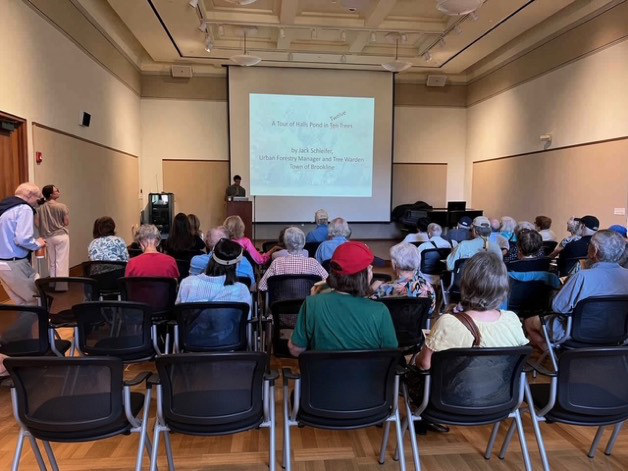
 Our annual meeting took place on June 24 in Hunneman Hall at the Brookline Public Library with over 50 people in attendance. Our speaker Jack Schleifer took us through “A Tour of Hall’s Pond in Twelve Trees.” He presented detailed information and fun facts about the following trees in the sanctuary: Atlantic White Cedar, Japanese Maple, Sargent Cherry, Eastern Redbud, River Birch, Eastern White Pine, Weeping Willow, Northern Red Oak, Tree of Heaven, Silver Maple, White Ash, and Black Tupelo.
Ann Frechette stepped down from her role as co-president but continues to serve on the Board. In addition to her many contributions to our Group, Ann organized and staged the outstanding 50th Anniversary Celebration of Hall’s Pond on June 22, 2025. She continues to be an active member of our community. We thank Ann for her dedicated service and care for this very special place.
Board member Kim Santo stepped forward and was elected to replace Ann as co-president at the Annual Meeting. Kim spoke about the importance of stewardship, which includes the difficult job of speaking up when we see someone inappropriately using the Sanctuary. One example is runners/joggers using the sanctuary to run laps, which is against conservation rules. Such interactions with visitors are teachable moments about the purpose of conservation sanctuaries.
The Hall’s Pond Maintenance Team, led by Priscilla Smith, resumed July 8 and continued every other Wednesday through September 30. For fuller details see her report below. Additionally, Alex Cassie and his DPW team have been tackling the yellow iris along the edge of the pond. While some of these invasives may seem attractive to the eye, they do more harm than good. Their presence threatens biodiversity and degrades ecological function. We are grateful to our hard-working Maintenance Team and our partners with Brookline DPW for ongoing stewardship.
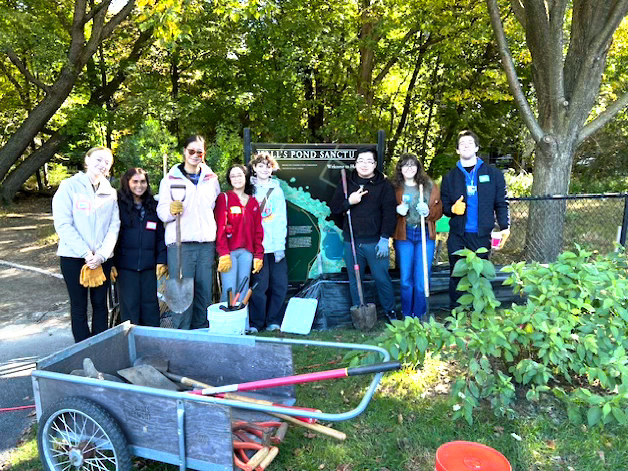
We had a small Spring Community Day that, due to the Sanctuary closure, was limited to the completion of resurfacing the path through the Upland Woods to cover tripping hazards. In contrast, we had a very robust Fall Community Day on October 18. Over 60 people attended and helped with plantings, invasives removal, and prepping the sanctuary for winter. Kim Santo was once again instrumental in recruiting numerous student volunteers from nearby Boston University. John Harris provided live music while everyone worked. Jenette Restivo supervised several fun children’s activities. And Neil Gore led visitors on tours of the sanctuary. It was one of the best Community Days we’ve had in quite some time.
As some of you know, a beloved Black Cherry tree (prunus serotina), that once stood leaning against the northeast corner bend of the boardwalk, began to break while boardwalk rehab was taking place. A decision was made to remove it to ensure the safety of workers and future visitors. Upon hearing the news of this loss, Len Blanchette of Wagon Wheel Nursery in Lexington generously donated three trees: a Black Tupelo, which was planted by DPW across from where the Black Cherry once stood, and a Star Magnolia that was planted by the Board in the field just inside the south gate. Unfortunately, the third tree, an American Hornbeam, died before it could be planted. However, additional Hornbeams were planted in Amory Woods. We are grateful to Lenny for his kindness and generosity.
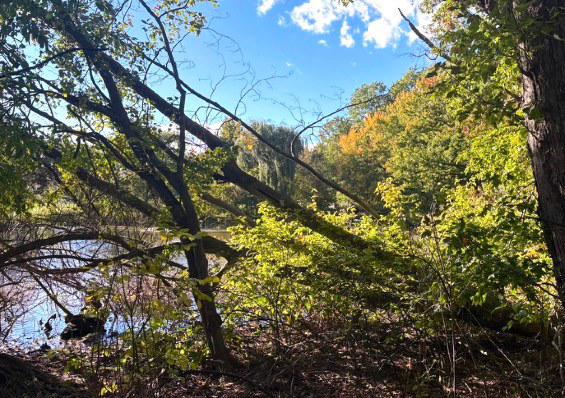
While we mourn the loss of any of our old tree friends that come down, we know that Nature is resilient and transformative. There’s already new growth emerging from the stump of the Black Cherry — how magical is that? As we look ahead to 2027, we will carry this spirit of resiliency in our continued stewardship of Hall’s Pond Sanctuary. We hope you’ll join us!
On the Recent Hall’s Pond Renovation
by Jesse Waisnor, PLA, Senior Landscape Architect, Town of Brookline Department of Public Works
HALL’S POND SANCTUARY was first protected as a conservation area in the 1970s and has long been one of Brookline’s most cherished natural spaces. Together with the adjoining Amory Woods, the sanctuary provides important habitat for birds, amphibians, pollinators, and other wildlife, while offering residents a peaceful place to experience nature within a busy urban neighborhood.
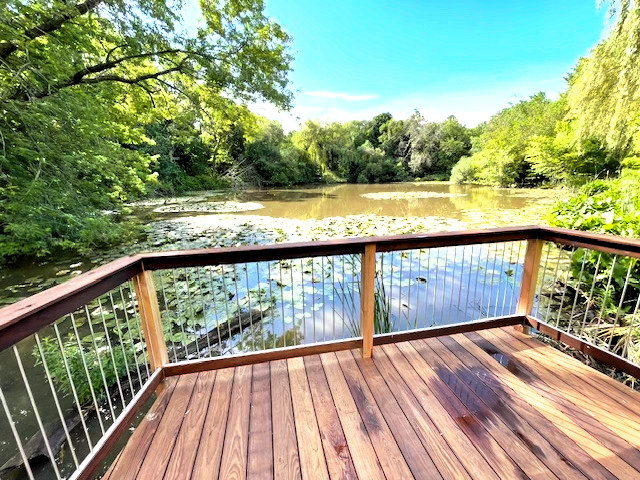
The boardwalk through Hall’s Pond and Amory Woods provides vital, accessible connectivity between these wild spaces. It allows visitors to experience the sanctuary even when seasonal rains fill the pond and surrounding wetlands. Following decades of use, the original boardwalk — constructed during the 2001–2002 renovation — had reached the end of its useful life. Many of the boards had become rotten, the railings were deteriorating, and portions of the boardwalk had settled and become uneven, leading to substantial issues with usability and accessibility.
In early 2024, the Town began the Design Review Committee (DRC) process for the renovation of Amory Playground, Hall’s Pond Sanctuary, and Amory Woods. The DRC completed its review and received approval from the Park and Recreation Commission the following summer. The design team then spent the remainder of the year planning and preparing construction documents and appropriate permitting for project bidding in early 2025.
Construction began at Amory Playground in July 2025, followed by work on the Hall’s Pond boardwalk in late October. In addition to capital funds, the project also received Community Preservation Act (CPA) funding to support the full reconstruction of the Amory Woods boardwalk and restoration.
One of the DRC’s goals was to create a boardwalk that was cohesive with its natural surroundings. Rather than using recycled plastic lumber, the Committee supported the use of a natural wood material instead. The final selection was thermally-modified ash, a durable wood that was kiln dried and factory-sealed to provide a rich, dark brown finish. Over time, exposure to sunlight and the elements will lighten the wood, allowing the boardwalk to naturally blend with its environs over time. The kiln drying process takes much of the natural moisture out of the wood and greatly prolongs its life span — it is projected that this boardwalk will last more than 20 years.
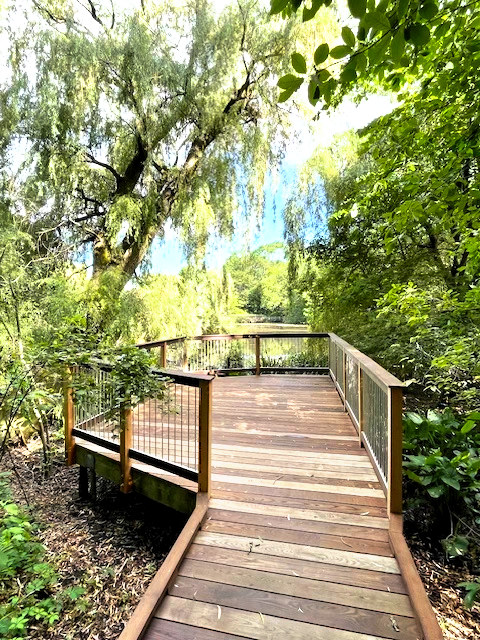
The new barrier railings also feature thermally-modified ash paired with sturdy metal spindles. These replace the previous wood-and-wire railing system and provide a stronger, more durable barrier that will promote prolonged integrity. During construction, the contractor also addressed areas where the structural elements of the boardwalk had settled or become uneven, leveling the walkway and making minor structural repairs as the new decking and toe rails were installed.
The work at Amory Woods involved a more extensive reconstruction. In addition to not meeting universal accessibility standards, the original boardwalk was vulnerable to seasonal flooding, and portions had become structurally deteriorated. A completely new boardwalk system was designed and constructed at a higher elevation, using the same thermally-modified ash materials as the Hall’s Pond boardwalk and providing a compliant route through the woods while reducing the impacts of seasonal flooding.
In addition to infrastructure upgrades, the project included hazardous limbs and tree removals within the sanctuary, addressing erosion along the parking lot edge, replacement of the fence separating the parking area from the sanctuary, new stone dust pathways lined with stone cobble connecting the boardwalks, and revitalized natural landscaping. Together, these improvements enhance the appearance, safety, accessibility, and long-term sustainability of the site.
The completed improvements at Hall’s Pond Sanctuary and Amory Woods demonstrate how thoughtful design can strengthen the connection between Brookline’s neighborhoods and its natural landscapes. The renovated boardwalks provide a safe and accessible way for people of all ages and abilities to explore these unique natural areas while protecting and celebrating the ecological character that continues Hall’s Pond Sanctuary and Amory Woods’ legacy as cherished natural spaces.
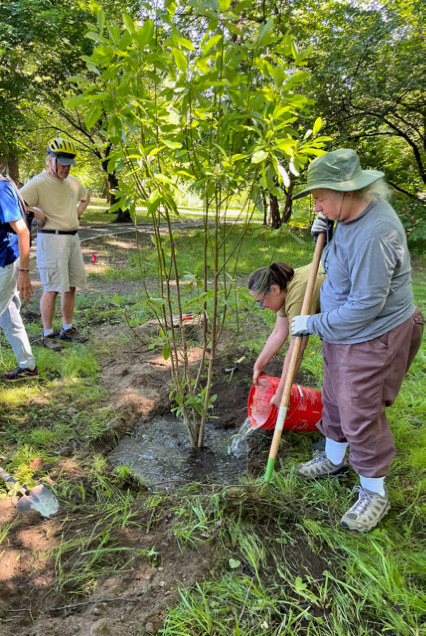
Volunteer Maintenance Team – 2026
by Priscilla Smith
THIS YEAR continued to be a challenge as the renovations to Amory Park restricted our access to all the areas of Hall’s Pond until mid-June. The biggest change with the renovations was the very needed replacement of the boardwalk in Hall’s Pond and the smaller boardwalk in Amory Woods.
Prior to the re-opening we were able to complete a special Earth Day project — restore the upland wood trail with the tremendous help from the Town of Brookline. In spite of all the challenges, once the conservation area was opened, there was a lot that was accomplished. Keeping up with the invasives is a never-ending task: multiflora, Purple Loosestrife, Bittersweet, Black-swallow Wort, Japanese Knotweed, and Tree of Heaven.
Special thanks to so many — John Shreffler (co-President) who watered new plants/trees every day so they would survive, Janet Wynn who kept our formal garden and centerpiece looking great, Karin Weaver who was at every maintenance session plus extra time to complete planting we were not able to finish during our regular times, and Charlotte Koonce who set up events on Eventbrite to attract some extra volunteers that brought in new people — Rafi and two out of town visitors — Shilpa and Laurie. Other regulars that accomplished so much — Catherine Saines, Jim Perrin, Ann Frechette, Rob Meyers, and Fran Perler. Joining us for a session were Mia Szymkowicz, Lily Mencarini and Sharon Hessey. We also welcomed some new volunteers in Robert Perry and Eileen Callahan.
New volunteers are always welcome. Spring, Summer, and Fall we have maintenance sessions every other week, weather permitting. Interested people will be contacted ahead of time and we try to set up a schedule so people can anticipate when the sessions will be. All of the work is done as a group under permit by the Conservation Administrator. For more information, contact volunteer coordinator, Priscilla Smith at pjs00002000@yahoo.com.
Bird Watching Renewed at Hall’s Pond Sanctuary
by Neil Gore
I REALLY MISSED birding at Hall’s Pond this spring. The comprehensive renovation of Amory Park and Hall’s Pond prohibited access to the Sanctuary. A few people birded from outside the fence, or maybe even sneaked inside somehow, but those reports were few and far between. I had not appreciated what a luxury it was to roll out of bed, and in five minutes start birding at Hall’s Pond.
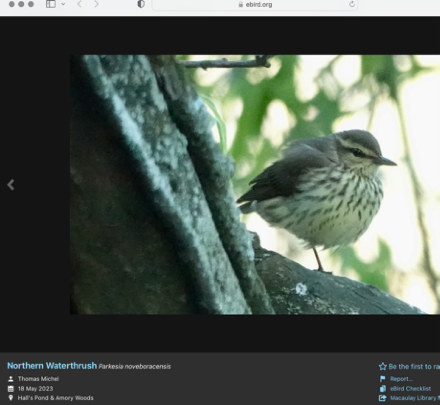
Of course, there are many excellent birding sites nearby in the Boston area, and so I diversified my trips to other locations, which was all well and good, but it wasn’t the same. I felt more like an outsider than an insider. I couldn’t count on seeing familiar migrating birds at the same spots right on time. Some favorite birds (Northern Waterthrush) I couldn’t find elsewhere. It was a little disorienting.
Some of the Hall’s Pond migrating birds I can see in my yard, a few blocks from the Sanctuary. The Gray Catbird is a frequent visitor and is a breeding bird in this area. I can see and hear the occasional migrating warblers in my yard, but they are not nearly as numerous and easy to find as at the Pond. And of course, having a birdbath really does not compete with a pond as a central habitat feature. No Great Blue Herons showed up in my yard. Just Turkeys — in abundance.
And then, as the reopening drew near, I was worried whether the resulting changes would be unfavorable for the birds. Birds are not particularly fond of manicured city parks, which lack thickets and bogs and overgrown tangles and unkempt woodlands, where there is better shelter, as well as more habitat diversity, probably with more food resources.
My first visit to the reopened Sanctuary allayed my fears. The results of the restoration work exceeded my expectations. There are many additional plantings of trees and shrubs, filling in landscape throughout Amory, and creating a calm organized whole, yet retaining the essence of this natural area.
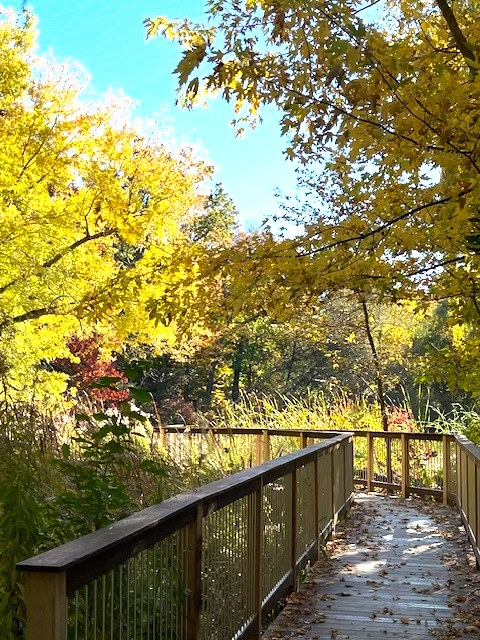
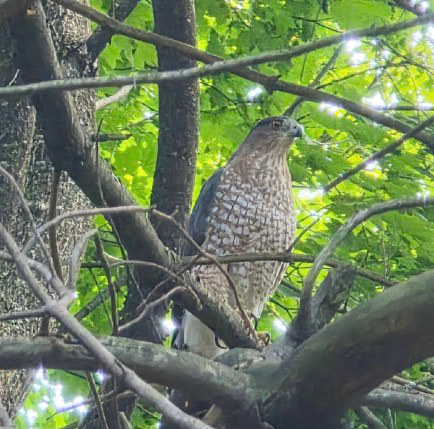
In October I took an exploratory walk to see if I could spot any favorable or unfavorable changes for the bird population. The incredibly beautiful fall foliage briefly overshadowed my thinking about birds. Then suddenly a Cooper’s Hawk flew in and perched overhead for several minutes. Finally the hawk dove into the woods pursuing a chipmunk which hid under a log. After several minutes of playing hide and seek with the chipmunk, the hawk gave up and flew off.
The hawk may have been unsuccessful, but the renovation of the Hall’s Pond Sanctuary looks to be a big success.
From the Conservation Manager
by Alex Cassie, Conservation & Natural Resources Manager, Town of Brookline
ONE of my highlights of this year has been seeing the excitement that went with the reopening of the boardwalk at Hall’s Pond Sanctuary. This, alongside the new boardwalk in Amory Woods, is an important part of helping visitors experience Brookline’s wild spaces while protecting its sensitive natural resources, and it has been wonderful to watch residents return. Ongoing efforts from the Department of Public Works have yielded grant-funded plantings and invasive plant removals, and in concert with stewardship efforts from the Friends, the Sanctuary looks better than ever.
What continues to inspire is the community’s connection to the sanctuary. In every season, Hall’s Pond welcomes people of all ages, from young families and students exploring nature to longtime neighbors enjoying a familiar walk through the landscape. Whether visitors come to observe wildlife, enjoy a quiet moment by the water, or simply experience the changing beauty of the seasons, the sanctuary remains a place where people and nature come together. Seeing so many residents not only embrace this remarkable resource, but work actively to protect and preserve it, reminds us why stewardship matters and reinforces our commitment to preserving Hall’s Pond for generations to come.
Is it Art, Science … or Both? (4.0)
by David Chalpin
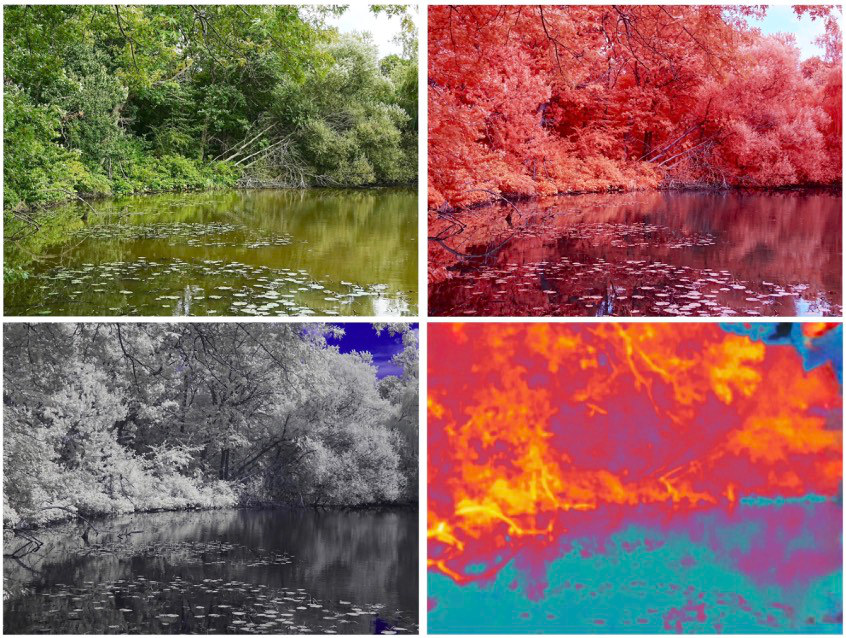
FOUR SPECTRAL VIEWS, each a separately acquired photograph, of Hall’s Pond. The photo at the upper left is visible light only (which has a wavelength range from 400 to 700 nm). The upper right photo renders infrared light reflecting off foliage as orange-red while the lower left photo is NDVI, employed in the agriculture industry and consists of both blue/purple and near-infrared light only. The image at the lower right is a thermal photo, derived from heat emitted by the subjects; it is from the portion of the infrared spectrum that has a wavelength range from 8000 to 14,000 nm (i.e. 8–14 μm).